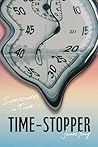
 Time-Stopper: Interludes in Time by James Young
My rating: 3 of 5 stars
The most interesting thing about this book was the premise: “What would you do with the ability to stop time?” Time-Stopper: Interludes in Time by James Young opens with a premise that immediately caught my attention. David is a man trying to balance work, relationships, ambition, and exhaustion who uses his ability to pause time to cope with his life and make it “perfect.” On the surface, that setup has so much possibility. It could become a story about power, temptation, loneliness, romance, ethics, or the consequences of bending reality to meet ordinary human desires. The idea of using stopped time to escape pressure, gain control, or simply exist without being rushed is genuinely compelling.
The book is at its strongest when it leans into that question: if you could step outside the clock, would you use that gift to become better, avoid pain, chase love, or just survive one more overwhelming day?
Pluses: The Washington, D.C. setting is clearly written from a place of familiarity. The political and corporate world feels specific, and readers who enjoy lobbying, workplace dynamics, Hill-adjacent maneuvering, and policy-heavy environments may appreciate how grounded the setting is and how accurate the backdrop is. There is a procedural quality to the story that gives it a different feel from a typical speculative thriller.
That said, this book did not fully deliver on what I hoped for from its premise. I wanted the time-stopping ability to drive the story, complicate David’s choices, and create emotional or moral stakes. Instead, the speculative element often feels secondary to the political workplace plot. There are long stretches focused on meetings, travel details, professional dynamics, and D.C. minutiae, while the time-stopping itself is used more sparingly than expected. For a concept with so much built-in tension, I kept waiting for it to become more central.
I also struggled with the emotional distance in the writing. Major moments that should have felt tense, romantic, heartbreaking, or transformative often came across as more explanations than lived experiences. The narrative tends to tell the reader what David is realizing or deciding rather than letting those changes unfold through action, dialogue, or emotional texture. Because of that, I had a hard time feeling fully connected to him or the other characters. This goes back to the inherent rule of storytelling, “show don’t tell.”
Time-Stopper is thoughtful in concept, but uneven in execution. I appreciated what it was aiming for, especially its interest in time, ambition, and consequences, but I wanted the story to make me feel more: more wonder, more tension, more heartbreak, and more connection to David’s journey.
I gave this 2.5 stars but rounded it up to 3 stars (⭐⭐⭐). Thank you to NetGalley and Amplify Publishing for the eARC in exchange for my honest opinion. I appreciate the opportunity to read and review this interesting and thought-provoking premise.
View all my reviews
Comments
Post a Comment